
Experience-Based Competition
The three pillars of a product: distribution, functionality, experience. Let's talk about the last one.
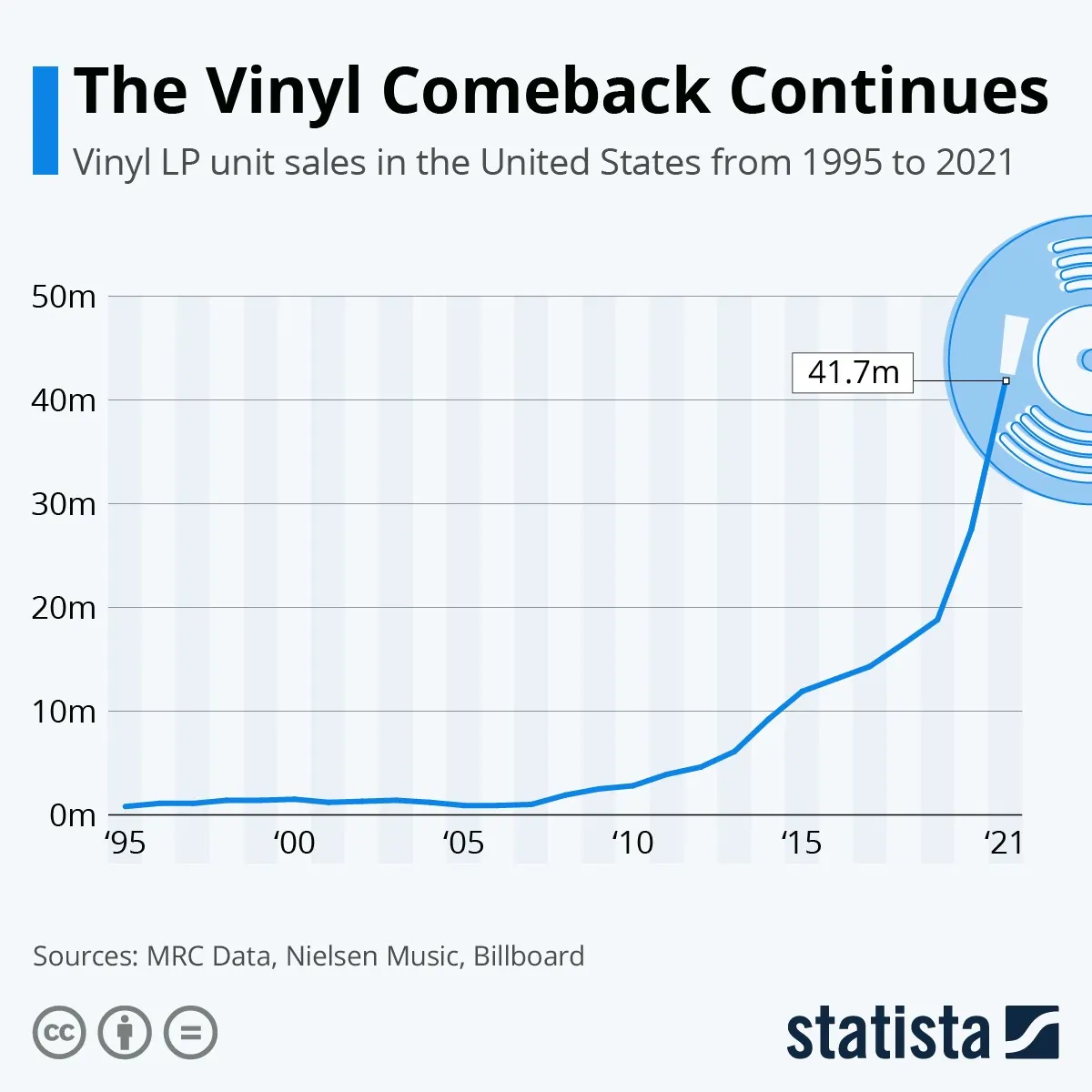
Back in those days, I was thinking about the reasons for the rising popularity of retro items. Indeed, these days you can easily spot film cameras and Polaroid equipment, vinyl records, and gadgets reminiscent of the Game Boy on store shelves. Young people are wearing clothes that our parents and grandparents used to wear. What’s more, you’d be amazed at the growing popularity of audio cassettes - and even typewriters! All these retro items are not only being sold but actually purchased. For instance, cassette sales in the UK rose by 103% in the first half of 2020 compared to the same period the previous year and continue growing. The vinyl market is growing at a breakneck pace - just look at the chart below.
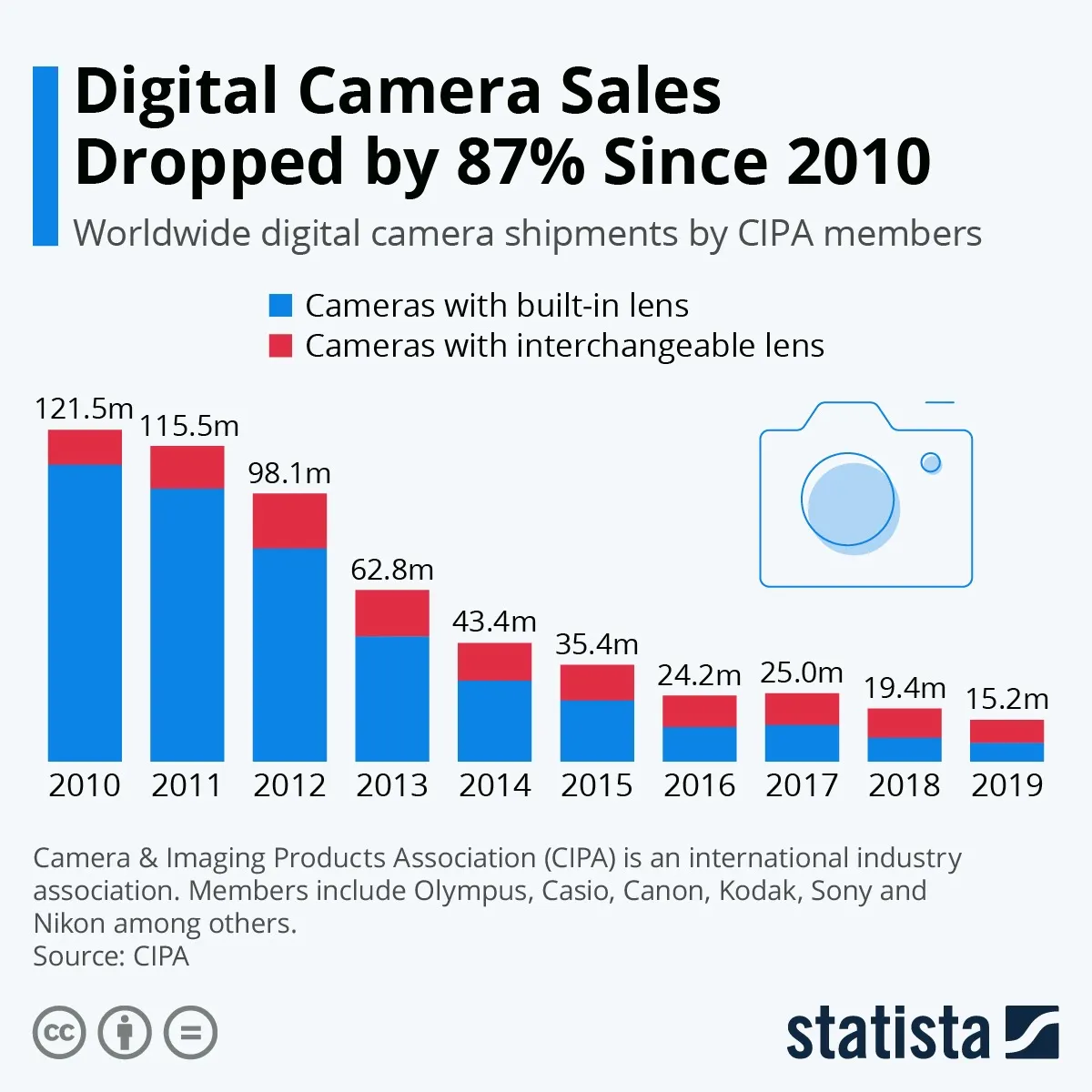
The instant camera market, which takes us back to the Polaroid era with its low-quality yet fast results, has already reached a valuation of USD 1.5 billion and continues to expand. Meanwhile, digital camera sales have plummeted by 87% since 2010! It’s clear that this decline mostly affected cameras with built-in lenses (in other words, the mass segment, rather than those catering to SLR enthusiasts).
But let’s return to the main question: “Why is this happening?” I’ve heard many excellent theories suggested. Some centred on nostalgia, others on exclusivity and elitism. But there was another important point: quite often, supply creates demand, not only the other way around. This is one of the key ideas to keep in mind.
There is a product theory and methodology called Jobs to Be Done. According to it, the user “hires” products to solve a particular task. And the moment a new product is adopted signifies a transition from one state to another (moving from one product to another). This leads us to conclude that every product is created in a knowingly competitive environment. Therefore, to sell it successfully, it must somehow stand out from its competitors in a better way.
Most companies attempt to differentiate themselves from competitors through better reliability, speed, cost, and similar metrics. But some companies follow the “Experience Driven” approach, putting the experience (the impressions) of using the product front and center. In this context, the experience is the company’s meta-product. That is what they choose as their competitive advantage. Bain wrote about the idea of focusing on experience here. One of the brightest examples is Apple. When they introduced their iPod audio player to the world, it wasn’t a direct competitor to giants like Sony Walkman or iRiver in terms of price, fine-tuning options, or sound quality. Back then, little-known (in our area) Meizu could beat the iPod in sound quality if you used good headphones, while costing two or three times less. But no other player could offer such delightful sensory feedback as the brainchild of Steve Jobs. Just recall how pleasant the metal casing felt, and how perfectly crafted the “clicks” of the touch wheel were. In my opinion, no one - not even Apple themselves - has been able to replicate such flawless system sounds. They bet on a special experience and won.
Now let’s try to apply this knowledge to assess the growth of the retro market. The experience-centric idea that Bain wrote about is becoming more popular mainly because it’s getting harder to compete, especially on a functional level. Nowadays, everyone can produce high-quality photos, deliver excellent sound, and provide a great display. The decisive factor is becoming the emotional resonance with the consumer. Now let’s consider the examples of retro products from the beginning of this post - what do they have in common? They all create a special experience: warm, tactile, analogue. And I think their manufacturers fully understand that competing in their segments means competing not against another product but against the experience consumers have grown tired of. The digital world has brought us not only vast opportunities but also a unified user experience. Many digital products find it challenging to offer something truly novel in terms of impressions. Digital standardisation and widespread consumer fatigue have created an excellent environment for reviving long-lost sensations as a value proposition.
In my view, the (conscious or instinctive) shift toward an experience-centric approach among manufacturers gave rise to a whole array of products leveraging the retro theme and setting the market’s direction. And soon enough, nostalgic consumers joined in. Will there be a rollback at some point? Will people, companies, and the market look to the future again? Undoubtedly. The key is once more to shape a new experience for the buyer, because eventually they’ll get tired of the analogue one too.